Choosing the right e-commerce platform is one of the most pivotal decisions for any direct-to-consumer (D2C) brand, directly impacting everything from daily operations to long-term growth. When it comes to search engine optimization (SEO), this decision becomes even more critical. Many brands find themselves at a crossroads, weighing the seemingly straightforward path of Shopify against the allure of a fully customized e-commerce solution. Both platforms offer distinct advantages and challenges for SEO, making the choice far from simple. This article will delve into the nuances of Shopify SEO and custom platform SEO, helping you understand which option aligns best with your D2C brand’s goals, resources, and technical expertise. We will break down their core differences, explore their respective strengths, and guide you through real-world scenarios to inform your strategic decision-making process.
The Short Answer: Shopify D2C SEO vs Custom Platform SEO At A Glance
When evaluating Shopify versus a custom platform for D2C SEO, it is helpful to look at their fundamental approaches and capabilities side-by-side. Each offers a unique ecosystem that influences how you implement and scale your SEO strategy.
Shopify D2C SEO
- Ease of Use: Built for merchants, not developers. Many SEO functions are plug-and-play or app-driven.
- Initial Setup: Fast deployment with templates and pre-built features. Low barrier to entry.
- SEO Tools: Basic built-in SEO features for meta titles, descriptions, and URLs. Extensive app store for advanced functionalities.
- Hosting & Security: Managed entirely by Shopify, providing reliability and peace of mind.
- Cost Structure: Subscription-based with transaction fees. Apps add to monthly costs.
- Customization Scope: Good for design via themes, limited control over core code or server-side functionality.
- Scalability: Excellent for small to large businesses via Shopify Plus, but still within Shopify’s ecosystem.
Custom Platform SEO
- Control & Flexibility: Full control over every aspect of the site’s architecture, code, and server environment.
- Initial Setup: Requires significant development time, resources, and technical expertise.
- SEO Tools: No out-of-the-box SEO features; everything must be built or integrated by developers. Allows for highly specific SEO implementation.
- Hosting & Security: Responsibility lies with the brand. Requires dedicated server management and security protocols.
- Cost Structure: High upfront development costs, ongoing maintenance, hosting, and potential licensing fees.
- Customization Scope: Unlimited possibilities for design, functionality, and unique SEO optimizations.
- Scalability: Can be built to scale precisely to unique needs, but requires proactive development and infrastructure planning.

What Is Shopify D2C SEO And When Does It Shine?
Shopify is a leading e-commerce platform that operates on a Software-as-a-Service (SaaS) model. It provides businesses with an all-in-one solution to build and manage their online stores without needing deep technical knowledge. For D2C brands, Shopify offers a streamlined path to market, focusing on user-friendliness and accessibility. The platform handles hosting, security, and many back-end complexities, allowing merchants to concentrate on products and sales.
Benefits of Shopify D2C for SEO
- Ease of SEO Implementation: Shopify offers intuitive fields for editing meta titles, descriptions, image alt text, and URL handles. Basic SEO tasks are straightforward, even for non-technical users.
- Robust App Ecosystem: The Shopify App Store boasts thousands of apps, many of which are designed to enhance SEO. These can add functionalities like advanced sitemap generation, broken link redirection, schema markup, and speed optimization without custom coding.
- Fast Site Speed (Out-of-the-Box): Shopify’s managed hosting and infrastructure generally provide good loading speeds, which are crucial for user experience and search engine rankings. Merchants do not need to worry about server maintenance or scaling bandwidth.
- Automatic Security & Updates: Shopify handles all software updates and security patches, ensuring your store remains secure and compliant without manual intervention. This frees up resources and minimizes potential SEO-damaging downtime.
- Mobile-First Design: Most Shopify themes are inherently responsive and mobile-friendly, providing a seamless experience across devices. Given Google’s mobile-first indexing, this is a significant SEO advantage.
- Simplified Technical SEO: Many technical SEO elements, such as canonical tags, robots.txt, and SSL certificates, are managed automatically by Shopify, reducing the burden on the brand.
When To Choose Shopify D2C
- New D2C Brands or Startups: If you need to launch quickly and cost-effectively, Shopify provides a fast track with minimal technical hurdles.
- Brands with Limited Technical Resources: If you do not have an in-house development team or a large budget for custom development, Shopify’s plug-and-play nature is ideal.
- Standard E-commerce Needs: For brands selling physical products with relatively straightforward product variations and a standard checkout process, Shopify’s features are usually sufficient.
- Emphasis on Speed to Market: When getting your products online and selling rapidly is a priority, Shopify’s quick setup allows you to focus on marketing and customer acquisition immediately.
- Budget-Conscious Operations: With predictable monthly fees and scalable plans, Shopify offers clear costing, which can be advantageous for managing budgets.
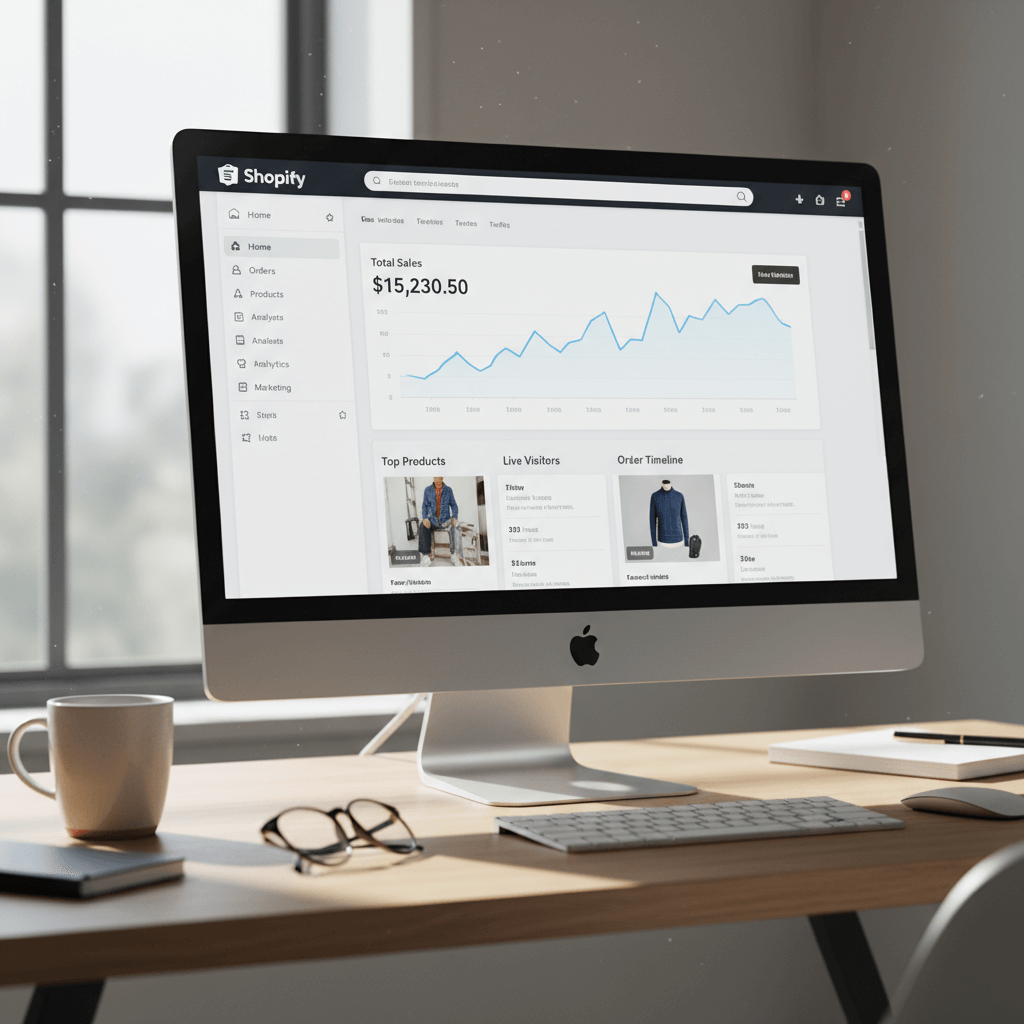
What Is Custom Platform D2C SEO And When Does It Win?
A custom e-commerce platform refers to a solution built from the ground up or heavily customized on an open-source framework (like Magento Open Source, WooCommerce, or headless commerce setups leveraging platforms like Contentful or Strapi for content and a custom frontend). This approach provides unparalleled flexibility and control over every aspect of your online store. While it demands greater investment in time and resources, it also opens the door to unique innovation and highly tailored solutions.
Benefits of Custom Platform D2C for SEO
- Ultimate Customization & Control: A custom platform allows for precise control over every element affecting SEO-from URL structures and site architecture to server configurations and custom schema markup. This means you can implement highly specific optimizations not possible on SaaS platforms. For more information on customization in e-commerce, see Wikipedia’s article on E-commerce.
- Unrestricted Scalability: You can build your platform to handle immense traffic, complex product catalogs, and intricate business logic without being constrained by a vendor’s limits. This is crucial for D2C brands anticipating rapid or exponential growth.
- Optimal Performance Tuning: Developers can fine-tune every line of code, server setting, and database query to achieve optimal site speed and Core Web Vitals scores. This granular control is a significant advantage for competitive SEO landscapes.
- Unique Features & User Experiences: Custom platforms empower brands to create distinctive shopping experiences, integrate unique product configurators, or implement advanced loyalty programs that can indirectly boost SEO by improving user engagement and reducing bounce rates.
- Proprietary Technology Integration: If your D2C brand relies on proprietary inventory systems, CRM, or analytics tools, a custom platform offers seamless, deep integration, creating a highly efficient ecosystem.
- No Vendor Lock-in: You own the code and infrastructure, providing greater freedom from platform-specific limitations or pricing changes.
When To Choose a Custom Platform D2C
- Large Enterprises & Complex Brands: Established D2C brands with unique operational requirements, extensive product lines, or high transaction volumes often benefit from the bespoke nature of a custom solution.
- Brands with Unique Business Models: If your brand has a non-standard sales process, complex subscription models, or highly configurable products that existing platforms cannot easily support, a custom build is necessary.
- High Performance Requirements: Brands that anticipate extremely high traffic, frequent large-scale promotions, or demand absolute maximum site speed will find custom platforms ideal for achieving these goals.
- Dedicated Technical Team & Budget: If you have an in-house development team or a substantial budget for agency development and ongoing maintenance, a custom platform can be a powerful asset.
- Long-Term Strategic Advantage: For brands looking to build a unique technological competitive advantage and avoid platform homogenization, a custom solution offers the ultimate differentiator.

How Fit Changes The Decision
The choice between Shopify and a custom platform is rarely about which is “better” in an absolute sense, but rather which is the “better fit” for your specific D2C brand. This fit is determined by several interconnected factors:
Your Brand’s Size and Growth Trajectory
- For Startups and SMBs: Shopify provides an excellent foundation to get started quickly, test markets, and scale up efficiently without massive initial investment.
- For Large Enterprises and Rapidly Scaling Brands: As complexity grows, so does the need for specific integrations, custom features, and precise control over SEO architecture. This is where custom solutions begin to show their true value.
Technical Resources and Expertise
- Limited Technical Team: If you lack in-house developers or prefer to outsource technical management, Shopify’s user-friendly interface and app ecosystem are invaluable.
- Robust Development Team: Brands with experienced developers or strong agency partnerships can leverage a custom platform’s flexibility to build highly optimized and innovative solutions. For details on software development, you can refer to Wikipedia’s article on Software Development.
Budget Considerations
- Predictable, Lower Upfront Costs: Shopify operates on a subscription model, making it easier to budget for ongoing expenses with lower initial investment.
- Higher Upfront and Ongoing Investment: A custom platform requires significant capital for initial development, followed by continuous investment in maintenance, security, and future enhancements.
Unique Functional and SEO Needs
- Standard E-commerce Operations: If your SEO strategy aligns with typical e-commerce practices and content marketing, Shopify’s features and apps will likely suffice.
- Highly Niche or Innovative Requirements: For advanced SEO strategies, unique product display, or deep integration with external systems, a custom platform allows for tailor-made solutions that can provide a distinct competitive edge.
Real Life Scenarios
To illustrate the decision-making process, let us consider a few real-world D2C brand scenarios:
The Artisan Coffee Roaster Startup
A new D2C brand specializing in single-origin, small-batch coffee wants to launch quickly with minimal upfront costs. Their website needs to showcase product photos, accept payments, and include a simple blog for content marketing. They have limited technical experience.
Verdict: Shopify. It allows them to launch a beautiful, functional store rapidly, handle inventory, and manage basic SEO without needing a developer. They can use Shopify apps for email marketing and simple subscription services.
The Custom Furniture Brand with a Configurator
An established D2C brand sells highly customizable furniture where customers can choose materials, dimensions, and finishes. Their website needs a complex 3D product configurator, dynamic pricing, and unique SKU generation that feeds directly into their manufacturing ERP. SEO is crucial for highly specific long-tail keywords related to custom designs.
Verdict: Custom Platform. Shopify’s customization limits would struggle with such a complex configurator and deep ERP integration. A custom platform would allow for bespoke development of the configurator, ensuring seamless data flow and granular SEO control over dynamically generated product pages.
The Eco-Friendly Apparel Brand Scaling Rapidly
A D2C apparel brand focusing on sustainable fashion has experienced viral growth. They now handle millions of monthly visitors, operate in multiple countries, and require complex inventory management across several warehouses. Their SEO strategy involves extensive localized content and dynamic merchandising based on user behavior.
Verdict: Shopify Plus or a Custom Solution. While Shopify Plus offers enterprise-level scalability within the Shopify ecosystem, some advanced customization for highly nuanced, localized SEO and extremely complex inventory needs might push them towards a headless commerce setup or a full custom build for ultimate control and performance tuning.
The Subscription Box Service for Niche Hobbyists
A D2C brand offers curated monthly subscription boxes for rare collectible items. They need a robust subscription management system, personalized product recommendations based on past box contents, and a vibrant community forum. SEO focuses on building authority around niche keywords.
Verdict: Hybrid or Custom. While Shopify has subscription apps, the depth of personalization, community integration, and custom logic required for this specific niche might push them towards a more flexible custom platform or a headless approach where Shopify handles the checkout, and a custom frontend manages the unique user experience.
Common Myths About Shopify vs. Custom Platform SEO
Misconceptions often cloud the decision-making process. Let’s debunk some common myths:
- Myth: Shopify is inherently bad for SEO. Reality: False. Shopify provides a solid foundation for SEO. It handles technical aspects well, offers good site speed, and supports basic on-page optimization. Many successful D2C brands thrive on Shopify, ranking highly for competitive keywords. The “bad for SEO” reputation often stems from users not implementing best practices or having unrealistic expectations from a SaaS platform’s limitations compared to a fully custom build.
- Myth: Custom platforms automatically guarantee better SEO. Reality: False. While a custom platform offers ultimate control, it does not inherently mean better SEO. Poorly developed custom platforms can be riddled with technical issues, slow speeds, and SEO oversights. Superior SEO on a custom platform is a result of expert development, ongoing maintenance, and a robust SEO strategy, not merely the choice of platform.
- Myth: You need a custom platform to rank for competitive keywords. Reality: Not true. Ranking high for competitive keywords depends more on your overall SEO strategy-including high-quality content, strong backlinks, user experience, and keyword research-than solely the platform itself. Shopify brands compete effectively with custom platforms daily.
- Myth: Shopify limits your ability to scale SEO. Reality: False. Shopify, especially with its Shopify Plus offering, is designed for enterprise-level scaling. While there might be specific, highly advanced SEO tactics that are easier to implement on a custom platform, Shopify’s continuous improvements and extensive app ecosystem support significant SEO growth and international expansion.
- Myth: A custom platform means no recurring costs. Reality: False. While you avoid Shopify’s subscription fees, a custom platform incurs significant ongoing costs. These include hosting, server maintenance, security updates, feature enhancements, bug fixes, and development team salaries or agency fees. These can often exceed Shopify’s monthly costs for larger, complex systems.
So… Shopify D2C Or Custom Platform D2C?
The ultimate decision rests on a comprehensive evaluation of your D2C brand’s unique circumstances and future aspirations. There is no one-size-fits-all answer, but rather a strategic alignment of your platform choice with your business model, budget, and growth trajectory.
Consider Shopify D2C If:
- You are a startup or small-to-medium-sized business aiming for rapid launch.
- Your team has limited technical expertise or developer resources.
- You prefer predictable, subscription-based costs and managed infrastructure.
- Your product catalog and business logic are relatively standard.
- You prioritize ease of use, stability, and leveraging a vast app ecosystem.
- Your SEO strategy aligns with best practices that are well-supported by Shopify’s core features and available apps.
Consider a Custom Platform D2C If:
- Your brand has highly unique functional requirements, complex integrations, or an innovative business model.
- You have a substantial budget for upfront development and ongoing maintenance.
- You possess a dedicated in-house development team or a strong partnership with an experienced agency.
- You require absolute control over every aspect of your site’s architecture, code, and server environment for hyper-optimized performance.
- Your long-term vision involves building proprietary technology or offering a truly distinct user experience that cannot be achieved with existing SaaS platforms.
- Your SEO strategy demands highly granular control over technical elements, unique data structures, or advanced content delivery mechanisms.
Both Shopify and custom platforms are powerful tools for D2C e-commerce, but they serve different needs. Take the time to meticulously assess your brand’s current state and future ambitions. A well-informed decision now will lay a robust foundation for your D2C brand’s SEO success and overall growth for years to come.
Sources
- E-commerce – Wikipedia
- Search engine optimization – Wikipedia
- Software as a service – Wikipedia
- Web development – Wikipedia
FAQ
Is Shopify good for D2C SEO?
Yes, Shopify is very good for D2C SEO. It provides essential built-in SEO features, offers reliable hosting, ensures fast site speeds out-of-the-box, and has a vast app ecosystem that extends its SEO capabilities. Many successful D2C brands achieve high rankings using Shopify.
Do custom platforms guarantee better D2C SEO?
No, a custom platform does not automatically guarantee better SEO. While it offers ultimate control and flexibility for highly specific optimizations, effective SEO still depends on expert development, proper implementation, and ongoing strategy. A poorly built custom site can perform worse than a well-optimized Shopify store.
What is the biggest SEO advantage of a custom platform?
The biggest SEO advantage of a custom platform is granular control. You have the ability to customize every aspect of the site’s architecture, server configuration, URL structures, and implement highly specific schema markup or performance optimizations tailored precisely to your brand’s unique needs without any platform limitations.
Can I migrate from Shopify to a custom platform later?
Yes, it is possible to migrate from Shopify to a custom platform. This is a significant undertaking that requires careful planning for data migration, URL redirects, and SEO preservation. Many brands start on Shopify for its ease of use and then transition to a custom solution as their needs become more complex and unique.
What are the hidden costs of a custom platform for D2C SEO?
Hidden costs of a custom platform often include ongoing development for maintenance, security updates, bug fixes, and new feature implementation. You also bear the costs of hosting, server management, and potentially higher agency fees for specialized SEO technical support, which can accumulate significantly over time.