As a direct-to-consumer (D2C) brand, navigating the vast digital landscape can feel overwhelming. You’ve likely heard of SEO – Search Engine Optimization – but the world of SEO itself has many facets. A common point of confusion for many growing D2C brands is whether to focus their efforts on local SEO or national SEO. This critical decision impacts your marketing budget, content strategy, and ultimately, your brand’s reach and profitability.
Understanding the nuances between these two powerful strategies is essential for carving out your niche and connecting with your ideal customers. It’s not always an either-or scenario, but knowing which approach aligns best with your current business model and future aspirations can drive significant growth. Let’s break down the core differences and help you determine the optimal path for your D2C brand.
The Short Answer: Local SEO vs National SEO At A Glance
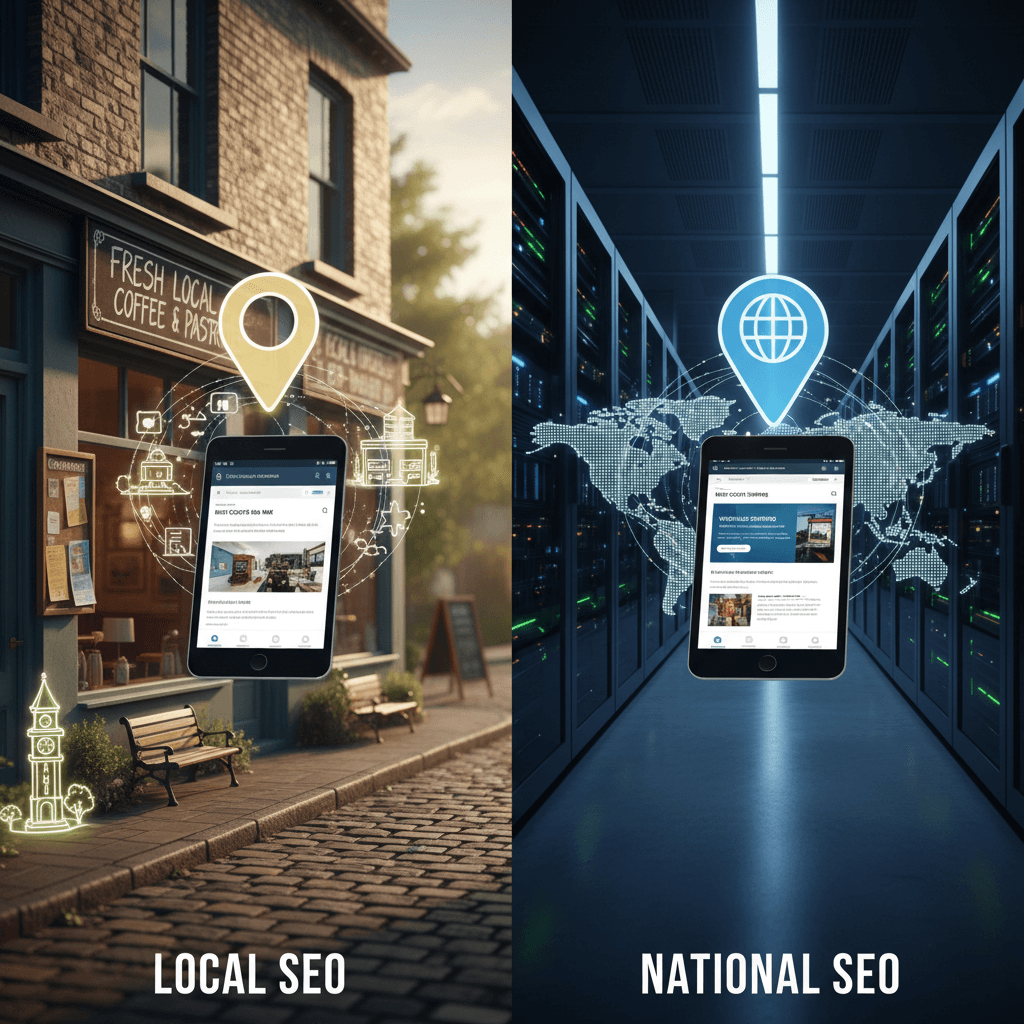
While both local and national SEO aim to improve your search engine rankings, they target different audiences and require distinct strategies. Here’s a quick comparison:
- Target Audience:
- Local SEO: Focuses on customers in a specific geographical area. Think people searching for “best coffee near me” or “boutique clothing [city name]”.
- National SEO: Targets customers across an entire country or multiple countries, regardless of their immediate physical location. Ideal for online-only stores.
- Keyword Strategy:
- Local SEO: Emphasizes location-specific keywords (e.g., “handmade jewelry Miami,” “organic skincare Toronto”).
- National SEO: Concentrates on broader, non-geographical keywords (e.g., “sustainable fashion brands,” “premium beauty products”).
- Primary Tools & Tactics:
- Local SEO: Google My Business optimization, local citations, online reviews, local content, localized landing pages.
- National SEO: Comprehensive website optimization, high-quality content marketing, robust backlink building, technical SEO audits.
- Competition:
- Local SEO: Generally less competitive, as you’re only competing with businesses in your immediate vicinity.
- National SEO: Highly competitive, as you’re vying for visibility with all businesses selling similar products or services across the nation.
- Time to Results:
- Local SEO: Often sees quicker results due to lower competition and specific, actionable steps (like GMB optimization).
- National SEO: Typically requires a longer-term commitment to see significant ranking improvements, especially for highly competitive keywords.
What Is Local SEO And When Does It Shine?
Local SEO is a specialized approach to Search Engine Optimization that focuses on improving your brand’s visibility in local search results. This is particularly relevant for D2C brands that have a physical storefront, pop-up shops, or serve a specific geographical area, even if their primary sales channel is online.
When someone searches for a product or service with a local intent – such as “running shoes Chicago” or “custom cakes near me” – search engines like Google prioritize businesses that are geographically relevant. Local SEO ensures your D2C brand appears prominently in these searches, often in the “local pack” (map results) or localized organic listings.
Benefits of Local SEO for D2C Brands
- Higher Conversion Rates: Local searchers are often looking to make a purchase quickly. Optimizing for local intent means you’re reaching customers precisely when they are ready to buy.
- Reduced Competition: By narrowing your focus to a specific geographic area, you naturally reduce the number of competitors vying for the same search terms. This can make it easier to rank and dominate your local market.
- Increased Foot Traffic (if applicable): For D2C brands with a brick-and-mortar presence, local SEO drives in-store visits, complementing your online sales channels. Even online-only D2C brands can benefit if they run local events or offer local pickup options.
- Builds Community & Trust: Establishing a strong local presence helps build brand recognition and trust within a community. Positive local reviews and consistent local engagement contribute significantly to this.
- Cost-Effective: Compared to national campaigns, local SEO can often be more budget-friendly, delivering a strong ROI for local-focused businesses.
When To Choose Local SEO
Local SEO is the right choice for your D2C brand if:
- You have a physical retail store, showroom, or pop-up locations that customers can visit.
- You offer services or products that are inherently location-dependent (e.g., custom furniture, local delivery of fresh produce).
- Your D2C model includes local pickup options or local events to engage with customers.
- You’re a new D2C brand looking to establish a strong foothold in your immediate area before expanding nationally.
- Your target demographic strongly values supporting local businesses.

What Is National SEO And When Does It Win?
National SEO, sometimes referred to as global SEO for international brands, is the practice of optimizing your D2C brand’s website to rank in search results across an entire country, or even globally. Its primary goal is to attract a broad audience from any geographic location within its target market, focusing on general product or industry-specific keywords rather than location-specific ones.
This strategy is paramount for D2C brands that operate exclusively online, ship nationwide, or have a product or service that isn’t tied to a specific physical location. For instance, a brand selling unique fashion accessories or sustainable home goods ships to customers all over the country. Their customer base isn’t limited by geography, making national SEO the most logical approach to maximize their reach.
For more detailed information on the broad scope of search engine optimization, you can refer to the Wikipedia article on Search Engine Optimization.
Benefits of National SEO for D2C Brands
- Maximized Reach: National SEO allows your D2C brand to connect with the widest possible audience, opening up your market beyond geographical constraints. This is critical for scaling an online-only business.
- Greater Brand Authority: Ranking for competitive national keywords builds significant brand authority and credibility. Consumers often associate high search rankings with trustworthy and leading brands.
- Scalability: As your D2C brand grows, a national SEO strategy provides a scalable framework for continuous expansion, allowing you to tap into larger markets without physical boundaries.
- Higher Sales Potential: A larger audience base naturally translates into a higher potential for sales and revenue. National SEO enables your D2C brand to compete on a national stage.
- Long-Term Asset: A well-executed national SEO strategy builds a powerful, long-term digital asset in your website, driving consistent organic traffic for years to come.
When To Choose National SEO
National SEO is the winning strategy for your D2C brand if:
- Your D2C brand is primarily an e-commerce business with no physical retail locations.
- You ship your products nationwide, making your customer base geographically dispersed.
- Your products or services appeal to a broad, general audience across the country.
- You’re looking to establish your brand as a leader or significant player in a national market.
- Your competitors are already operating on a national scale, and you need to keep pace or surpass them.

How Fit Changes The Decision
The “best” SEO strategy isn’t a universal truth; it’s about what fits your D2C brand’s unique characteristics, goals, and resources. Consider these aspects when making your decision:
Consider Your Product/Service
- Locally Dependent? If your product is perishable, requires in-person fitting, or offers a service tied to a physical location (e.g., custom tailoring, local workshops), local SEO is crucial.
- Shippable/Digital? For products easily shipped nationwide or digital services, national SEO opens up a much larger market.
- Niche vs. Mass Appeal: A highly niche product might find success quicker with national SEO by targeting specific, less competitive long-tail keywords, whereas a mass-appeal item might face intense competition nationally.
Evaluate Your Business Model
- Online-Only: If you’re a pure e-commerce player with no physical storefront, national SEO is almost always the primary focus. You want customers from everywhere you can ship.
- Hybrid Model: D2C brands with both an online store and physical locations (e.g., flagship store, pop-ups) will benefit from a blended strategy, leveraging both local and national SEO.
- Scaling Goals: If your immediate goal is to dominate a local market before expanding, local SEO provides a strong foundation. If rapid, widespread growth is the priority, national SEO is key.
Assess Your Resources
- Budget: National SEO often requires a larger budget and longer timeline due to higher competition and the comprehensive nature of the strategy (e.g., extensive content creation, higher-tier link building). Local SEO can be more cost-effective for initial gains.
- Team & Expertise: Both strategies require dedicated effort. Do you have the internal expertise or partner with an agency like D2SEO that understands the specific demands of each?
- Time Horizon: Are you looking for quicker wins in a specific area, or are you prepared for a sustained, long-term effort to build national authority?
Real Life Scenarios
Let’s illustrate how different D2C brands might choose their SEO focus:
Scenario 1: The Artisan Coffee Roaster with a Tasting Room
A D2C brand selling ethically sourced, small-batch coffee online, but also having a popular tasting room and local pickup option in Portland, Oregon.
- Recommendation: A hybrid strategy leaning heavily on Local SEO.
- Why: While they ship nationally, the physical location is a key differentiator and revenue driver. They need to rank for “coffee roasters Portland,” “best coffee shop near me,” and “espresso beans delivery Portland” to attract local customers, while also using national SEO for terms like “best organic coffee beans online” to reach a wider audience.
Scenario 2: The Online-Only Sustainable Fashion Brand
A D2C brand selling unique, eco-friendly apparel and accessories exclusively through their website, shipping throughout the United States.
- Recommendation: Primarily National SEO.
- Why: Their customer base is nationwide, not localized. They need to rank for terms such as “sustainable clothing brands,” “ethical fashion online,” “eco-friendly dresses,” and “vegan leather handbags.” Local SEO would offer minimal benefit as there’s no physical location to drive traffic to.
Scenario 3: The Custom Furniture Maker with a Workshop
A D2C brand creating bespoke, handcrafted furniture, operating from a workshop in Brooklyn, New York, and offering local delivery or pickup within a 100-mile radius.
- Recommendation: Strong focus on Local SEO.
- Why: The nature of their product (heavy, custom, high-value) means customers are often searching locally. They would target “custom furniture Brooklyn,” “bespoke tables NYC,” “handmade chairs Queens,” and build local citations to dominate their service area. National SEO might be a secondary consideration for high-end, shippable small items, but the core business is local.
Common Myths About D2C SEO
- Myth: National SEO is only for huge brands. Reality: While competitive, even smaller D2C brands can compete nationally by focusing on niche keywords, building authority in specific sub-categories, and creating exceptional content. Smart strategy trumps sheer size.
- Myth: Local SEO is just about Google My Business. Reality: GMB is critical, but local SEO also involves local citations, consistent NAP (Name, Address, Phone) information across directories, local content, online reviews management, and local link building.
- Myth: Once you rank, you’re set forever. Reality: SEO is an ongoing process. Search engine algorithms constantly evolve, competitors emerge, and market trends shift. Continuous optimization, content updates, and link building are essential.
- Myth: SEO is too expensive for D2C brands. Reality: While it requires investment, SEO often offers a higher ROI than paid advertising in the long run. The traffic generated is organic, consistent, and builds valuable brand equity. Many D2C brands find working with agencies like D2SEO to be a smart investment.
- Myth: Content marketing isn’t important for D2C product sales. Reality: High-quality content (blog posts, guides, product descriptions, videos) is vital for both local and national SEO. It educates customers, answers their questions, builds trust, and provides keyword-rich material for search engines. It also supports the broader field of Digital marketing efforts.
So… Local Or National SEO?
The decision between local and national SEO for your D2C brand isn’t always clear-cut, but it’s a strategic one that should align with your business goals and operational realities. For many D2C brands, particularly those with an exclusive online presence and nationwide shipping capabilities, a strong national SEO strategy will be the primary driver of growth and visibility.
However, if your D2C brand has physical touchpoints, offers location-specific services, or thrives on community engagement, integrating a robust local SEO component is non-negotiable. In some cases, a blended approach is best, where local SEO supports physical locations or regional events, while national SEO casts a wider net for online sales.
At D2SEO, we recommend a thorough audit of your current operations, target audience, competitive landscape, and long-term vision. This holistic assessment will help you determine the optimal SEO strategy to maximize your brand’s potential in the D2C market. Remember, the goal is to be where your customers are searching, whether that’s across the street or across the country.
Sources
- Search Engine Optimization – Wikipedia
- Digital Marketing – Wikipedia
- E-commerce – Wikipedia
- Google Business Profile – Google
- E-commerce – Wikipedia
FAQ Section
Q1: Can a D2C brand do both local and national SEO simultaneously?
A: Yes, absolutely. Many D2C brands with both an online presence and physical locations (e.g., showrooms, pop-ups, flagship stores) benefit greatly from a hybrid approach. They can use national SEO for their main website and general product queries, while simultaneously optimizing for local SEO to drive foot traffic and local sales to their physical points of presence.
Q2: How important are reviews for local D2C SEO?
A: Reviews are extremely important for local D2C SEO. Positive reviews on platforms like Google My Business significantly impact your local search rankings and build trust with potential local customers. They are a strong ranking signal for Google’s local pack algorithm and often influence purchasing decisions more than traditional advertising.
Q3: What’s the first step for a D2C brand starting with national SEO?
A: The first step for a D2C brand starting with national SEO is typically a comprehensive website audit and keyword research. This involves identifying technical SEO issues, understanding your target audience’s search habits, and finding relevant, high-volume keywords with appropriate competition levels. Building a strong technical foundation and understanding your keyword landscape are crucial.
Q4: Does national SEO work for niche D2C products?
A: Yes, national SEO can be highly effective for niche D2C products. In fact, niche products often thrive with national SEO because they can target specific long-tail keywords that have lower search volume but higher conversion intent. While competition for broad terms might be high, dominating a specific niche nationally can be very lucrative without needing a massive budget.
Q5: Is social media integration part of D2C SEO?
A: While social media is not a direct ranking factor for SEO, it plays an indirect yet significant role. Social signals can increase brand visibility, drive traffic to your website, and help distribute your content, which can in turn lead to more backlinks and mentions – all of which positively influence SEO. A strong social presence complements both local and national SEO efforts for D2C brands.