Launching a new direct-to-consumer (D2C) brand is an exciting venture, but the digital landscape can feel like a vast ocean. Without proper visibility, even the most innovative products can struggle to find their audience. Many new D2C entrepreneurs find themselves overwhelmed by the sheer volume of information and the perceived complexity of search engine optimization (SEO). You might be wondering how to compete with established brands, especially with a limited marketing budget.
The good news is that you don’t need an elaborate, expensive tech stack to start strong. A strategic selection of essential SEO tools can empower your brand to climb search rankings, attract organic traffic, and convert visitors into loyal customers. This starter kit is designed to demystify SEO, providing you with practical, accessible tools to build a robust online presence from day one. Let’s equip your brand for sustainable growth.
How To Choose The Right Essential SEO Tools
Selecting the perfect SEO tools for your budding D2C brand involves more than just picking popular options. It’s about finding resources that align with your budget, technical comfort, and immediate growth objectives. Consider these key criteria when building your SEO toolkit:
- Budget-Friendly Options: As a new D2C brand, every dollar counts. Prioritize free tools or those with robust free tiers and affordable paid plans that offer significant value for money.
- Ease of Use and Learning Curve: You need tools that are intuitive and don’t require extensive training. Focus on platforms with clear interfaces and readily available tutorials, allowing you to quickly implement insights.
- Core Features: Ensure the tools cover fundamental SEO tasks like keyword research, competitor analysis, technical site audits, and performance tracking. A balanced toolkit will address these essential areas.
- Actionable Insights: The best tools provide data you can immediately act upon. Look for those that offer clear recommendations, not just raw data, to guide your content and technical optimizations.
- Scalability: While you’re starting small, consider if the tool can grow with you. Does it offer more advanced features or higher data limits as your brand expands?
- Integration Capabilities: If you use specific e-commerce platforms like Shopify, investigate if the SEO tools offer seamless integrations or complementary features.
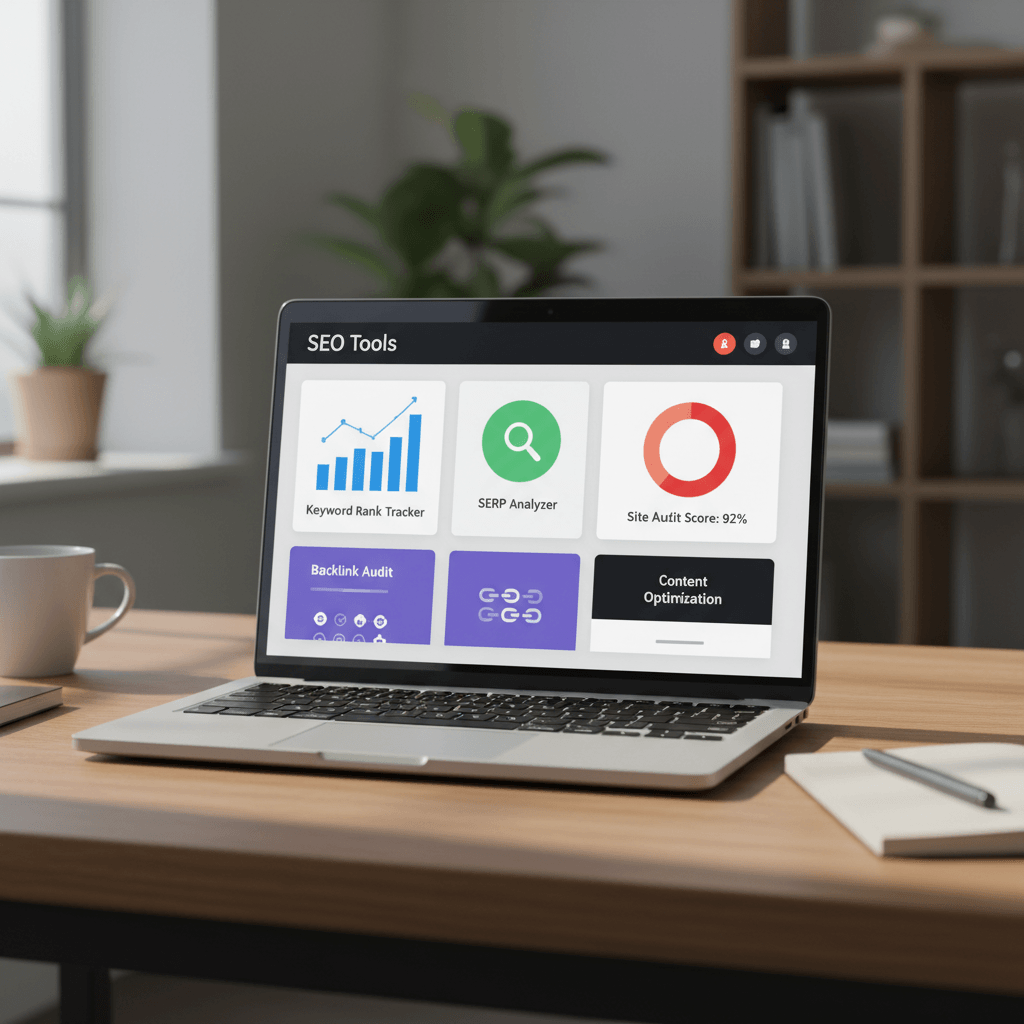
A Quick Look At Your SEO Tool Starter Kit
Before diving into the specifics, here’s a brief overview of the essential SEO tools that will form the backbone of your D2C brand’s online strategy. These tools are chosen for their effectiveness, accessibility, and ability to deliver actionable insights, even for beginners.
- Google Search Console – Your direct communication line with Google, providing critical technical SEO and performance data.
- Google Analytics 4 (GA4) – The indispensable platform for understanding how users interact with your website.
- Ubersuggest – A user-friendly, all-in-one tool for keyword research, content ideas, and competitor analysis.
- Ahrefs Webmaster Tools – Offers free site audits, backlink analysis, and keyword tracking for verified sites.
- Moz Link Explorer (Free) – Provides insights into domain authority and backlink profiles with limited free searches.
- SEMrush Keyword Magic Tool (Free) – A powerful tool for keyword research, offering limited daily queries without a subscription.

Deep Dive Into Essential SEO Tools for New D2C Brands
Now, let’s explore each tool in detail, understanding its unique strengths and how it can contribute to your D2C brand’s SEO success. Each serves a distinct purpose, yet they all work together to paint a complete picture of your online performance and opportunities.
1. Google Search Console (GSC)
- Best For: Technical SEO monitoring, understanding how Google sees your site, identifying indexing issues, and tracking search performance.
- Key Features: Performance reports (impressions, clicks, average position), index coverage, core web vitals, mobile usability, security issues, manual actions.
- Price Range: Free
Why You Will Love It: Google Search Console is truly non-negotiable for any website owner. It’s Google’s official tool to help you monitor your site’s presence in search results. GSC provides invaluable data directly from the source, telling you which keywords users are searching for to find your site, how many times your site appears in results (impressions), and how many times it’s clicked. It also alerts you to critical technical issues like crawling errors or mobile usability problems that could hurt your rankings, allowing you to fix them proactively.
Keep In Mind: GSC focuses on Google search data and technical health. While essential, it doesn’t offer deep competitor analysis or keyword difficulty metrics like some other tools. Its primary role is diagnostic and performance monitoring within Google’s ecosystem.
2. Google Analytics 4 (GA4)
- Best For: Understanding user behavior on your website, tracking conversions, audience demographics, and overall site traffic performance.
- Key Features: Event-based data model, cross-platform tracking, audience insights, real-time reports, conversion tracking, integration with other Google products.
- Price Range: Free
Why You Will Love It: GA4 provides a holistic view of user engagement, helping you understand where your visitors come from, what pages they view, how long they stay, and what actions they take (e.g., adding to cart, making a purchase). This data is crucial for optimizing your D2C website for better user experience and higher conversion rates. By connecting GA4 with GSC, you can get a powerful combined view of traffic acquisition and on-site behavior, informing both your SEO and overall marketing strategies. It helps you see the actual impact of your SEO efforts on your business goals.
Keep In Mind: GA4 has a steeper learning curve compared to its predecessor (Universal Analytics) due to its event-based data model. While incredibly powerful, mastering all its features requires time and dedication. Focus on key reports relevant to D2C goals first, such as traffic sources, engagement, and conversions.
3. Ubersuggest by Neil Patel
- Best For: All-in-one affordable solution for keyword research, content ideas, competitor analysis, and site audits, particularly for smaller budgets.
- Key Features: Keyword ideas, content ideas, competitive analysis, site audit, backlink data, rank tracking.
- Price Range: Free tier with daily limits, affordable paid plans starting around $29/month.
Why You Will Love It: Ubersuggest offers an impressive array of SEO features packaged in a user-friendly interface. For new D2C brands, its free tier provides valuable daily searches for keyword suggestions, content ideas based on popular articles, and even basic site audit reports. The paid plans are significantly more affordable than enterprise-level tools, making it an excellent stepping stone for growth. It helps you identify profitable keywords, analyze what your competitors are doing well, and pinpoint technical issues on your own site, all within a single platform.
Keep In Mind: While comprehensive for its price point, Ubersuggest’s data depth and accuracy, especially for highly niche or international markets, might not match the industry leaders like Ahrefs or SEMrush. However, for most new D2C brands, its capabilities are more than sufficient to make informed SEO decisions and gain a competitive edge.
4. Ahrefs Webmaster Tools (AWT)
- Best For: Free site audits, detailed backlink analysis, and keyword tracking for websites you own and verify.
- Key Features: Comprehensive site audit (technical SEO issues), backlink checker, organic keyword reports, content gap analysis, free version available for verified site owners.
- Price Range: Free for verified site owners (Ahrefs Webmaster Tools), paid plans start at $99/month.
Why You Will Love It: Ahrefs is renowned for its backlink data and comprehensive site audits. With Ahrefs Webmaster Tools, D2C brand owners can access a powerful subset of Ahrefs’ premium features for free, simply by verifying their website. This includes a full site crawl to identify technical SEO issues (like broken links, missing meta descriptions, slow pages), detailed backlink reports to see who is linking to your site, and an organic keywords report to discover what you rank for. This is invaluable for understanding your site’s technical health and link profile without a major investment.
Keep In Mind: The free AWT primarily focuses on your own verified website data. To conduct extensive competitor research, broader keyword analysis, or track a large number of keywords across multiple sites, you would need to upgrade to a paid Ahrefs plan. However, the free tool is a fantastic starting point for in-depth technical audits and understanding your own link profile.
5. Moz Link Explorer (Free)
- Best For: Quick checks of domain authority, competitor backlink profiles, and general link research.
- Key Features: Domain Authority (DA) score, Page Authority (PA) score, linking domains, spam score, limited free searches per day.
- Price Range: Limited free searches, paid plans start at $99/month.
Why You Will Love It: Moz’s Link Explorer is an excellent resource for understanding a website’s authority and backlink profile. Its free version allows a limited number of daily searches, which is perfect for new D2C brands to perform quick checks. You can analyze your own site’s Domain Authority (a Moz proprietary metric for ranking strength) and see who is linking to you. More importantly, you can peek at your competitors’ backlink profiles, identifying potential link building opportunities or understanding their ranking advantages. This insight is crucial for developing a robust off-page SEO strategy.
Keep In Mind: The free version is highly restrictive in terms of daily searches and depth of data. For comprehensive backlink analysis, bulk exports, or extensive keyword research, a paid Moz Pro subscription is necessary. Use the free tool for targeted checks and to gain a high-level understanding of link metrics.
6. SEMrush Keyword Magic Tool (Free)
- Best For: Generating a vast array of keyword ideas and analyzing their search volume and difficulty, especially for content planning.
- Key Features: Keyword ideas generator, keyword difficulty, search volume, SERP features insights, limited daily queries in the free version.
- Price Range: Limited free searches, paid plans start at $129.95/month.
Why You Will Love It: SEMrush is another industry giant, and its Keyword Magic Tool is exceptionally powerful for unearthing thousands of keyword opportunities. The free version allows you to perform a limited number of searches per day, which is still incredibly useful for new D2C brands to kickstart their content strategy. You can input a broad term related to your product and get back a comprehensive list of related keywords, complete with estimated search volumes and keyword difficulty scores. This helps you identify long-tail keywords and content topics that are easier to rank for, providing quick wins for your brand.
Keep In Mind: Similar to Moz and Ahrefs, the free access to SEMrush’s tools is significantly limited. You won’t be able to export full lists or perform deep, extensive research without a paid subscription. However, for generating initial ideas and validating content topics, even the limited free access is a potent asset for your D2C SEO efforts.
Best SEO Tools For Different D2C Scenarios
Your D2C brand’s immediate SEO needs might vary. Here’s how to best deploy your starter kit for specific situations:
- For Budget-Conscious Brands Prioritizing Foundation: Start with
Google Search Console and Google Analytics 4. These are free, foundational, and provide direct data from Google. Supplement with Ubersuggest’s free tier for initial keyword research and content ideas, as it offers a great blend of features for no cost. - For Brands Focusing on Technical Health & Backlinks: Utilize
Google Search Console for critical alerts and core web vitals. Combine this with the free
Ahrefs Webmaster Tools to get a deep dive into your site’s technical issues and backlink profile. Use
Moz Link Explorer (Free) for quick competitor DA checks. - For Brands Driving Content Strategy & Keyword Research: Leverage
Ubersuggest for comprehensive keyword and content ideas. Use
SEMrush Keyword Magic Tool (Free) for additional keyword ideation and difficulty analysis.
Google Analytics 4 will then track how this content performs with users, while
Google Search Console shows its search visibility.

Integrating SEO Tools Into Your D2C Strategy
Having these tools is only the first step; effectively integrating them into your D2C brand’s workflow is key to success. Start by setting up each tool correctly, ensuring your website is verified and data collection is active. Dedicate a specific time each week or month to review the insights from your tools. Don’t try to tackle everything at once.
Prioritize critical issues reported by Google Search Console first. Then, use keyword research tools to identify low-hanging fruit keywords for new product pages or blog content. Track your progress in Google Analytics, looking at organic traffic growth and conversions. Gradually, as you become more comfortable, you can explore the more advanced features of each tool and connect the dots between technical SEO, content strategy, and user behavior.
Maximizing The Longevity Of Your SEO Efforts
SEO is not a one-time setup; it’s an ongoing process that requires consistent attention and adaptation. To ensure your D2C brand’s SEO efforts yield long-term results, consider these practices:
- Consistent Monitoring: Regularly check your Google Search Console for new errors or performance changes. Monitor Google Analytics for shifts in traffic patterns or user engagement.
- Continuous Learning: The SEO landscape is constantly evolving with algorithm updates and new technologies. Stay informed by following reputable SEO blogs and industry news to adapt your strategies.
- Content Refresh: Don’t just create new content; periodically review and update existing content on your D2C site. Old blog posts or product descriptions can often be revitalized with fresh information and updated keywords, giving them a second life in search rankings.
- Technical Health Checks: Run site audits with Ubersuggest or Ahrefs Webmaster Tools on a regular basis (e.g., quarterly) to catch any accumulating technical debt before it becomes a major problem.
- Adapt to User Behavior: Use insights from Google Analytics to understand what your audience truly values. Optimize your site’s navigation, product presentation, and checkout process based on how users interact with your brand.
Your Next Step Towards D2C SEO Success
Building a successful D2C brand requires more than just a great product; it demands a strong online presence. With this starter kit of essential SEO tools, you have the resources to analyze your website’s performance, understand your audience, outmaneuver competitors, and strategically grow your visibility in search results. Don’t be intimidated by the initial learning curve; every step you take in understanding and implementing SEO will compound over time, driving organic growth and building a sustainable future for your brand.
Start by setting up Google Search Console and Google Analytics, then explore the keyword research capabilities of Ubersuggest, Ahrefs, Moz, and SEMrush. Begin implementing small changes based on your findings, and consistently monitor their impact. Your D2C brand’s online success begins with a solid SEO foundation, and these tools are your blueprints. Start implementing these tools today to build a strong foundation for your D2C brand’s online success.
Sources
- Search engine optimization – Wikipedia
- Web analytics – Wikipedia
- About Search Console – Google Search Central
- Google Analytics – Official Website
- Ubersuggest – Neil Patel
Frequently Asked Questions About D2C SEO Tools
Q: What’s the most important free SEO tool for a new D2C brand?
A: For any D2C brand, Google Search Console is arguably the most important free tool. It provides direct insights from Google about how your site performs in search, highlights critical technical issues, and shows you the exact queries users are searching to find you. It’s essential for understanding your organic visibility and health.
Q: How often should I check my SEO tools?
A: It’s recommended to check your core tools like Google Search Console and Google Analytics at least once a week for performance trends and error alerts. For keyword research and competitive analysis tools, a deeper dive once a month or quarterly is usually sufficient, unless you’re launching new products or campaigns that require more immediate research.
Q: Can I do SEO effectively without paying for any tools?
A: Yes, you can certainly build a solid SEO foundation using entirely free tools. The Google suite (Search Console, Analytics, Keyword Planner) provides robust data for performance tracking and keyword research. Tools like Ubersuggest, Ahrefs Webmaster Tools, Moz, and SEMrush also offer powerful free tiers that, while limited, are incredibly valuable for new D2C brands to get started and gain significant insights.
Q: What’s the main difference between Google Analytics and Google Search Console?
A: Google Search Console focuses on how your website appears in Google Search results and its technical health. It tells you what keywords you rank for, how many times your site appears (impressions), how many clicks it gets, and alerts you to crawling or indexing issues. Google Analytics, on the other hand, focuses on user behavior *after* they land on your site. It tells you where your visitors come from, what pages they view, how long they stay, and what actions they take (e.g., purchases, sign-ups). Together, they provide a comprehensive view of your D2C brand’s online journey, from search to conversion.