Are your incredible products getting lost in the vast digital marketplace? You’ve poured your heart into creating a premium D2C brand, perfecting every detail, yet your Shopify product pages aren’t generating the organic traffic and sales you envisioned. It’s frustrating to know your ideal customers are out there, searching for exactly what you offer, but they’re not finding you. This often leads to an over-reliance on expensive paid advertising, squeezing your margins and limiting your true growth potential. But what if there was a way to consistently attract high-intent buyers directly to your product pages, turning browsers into loyal customers without breaking the bank? The good news is, there is.
The Problem: Your Products Are Hidden In Plain Sight
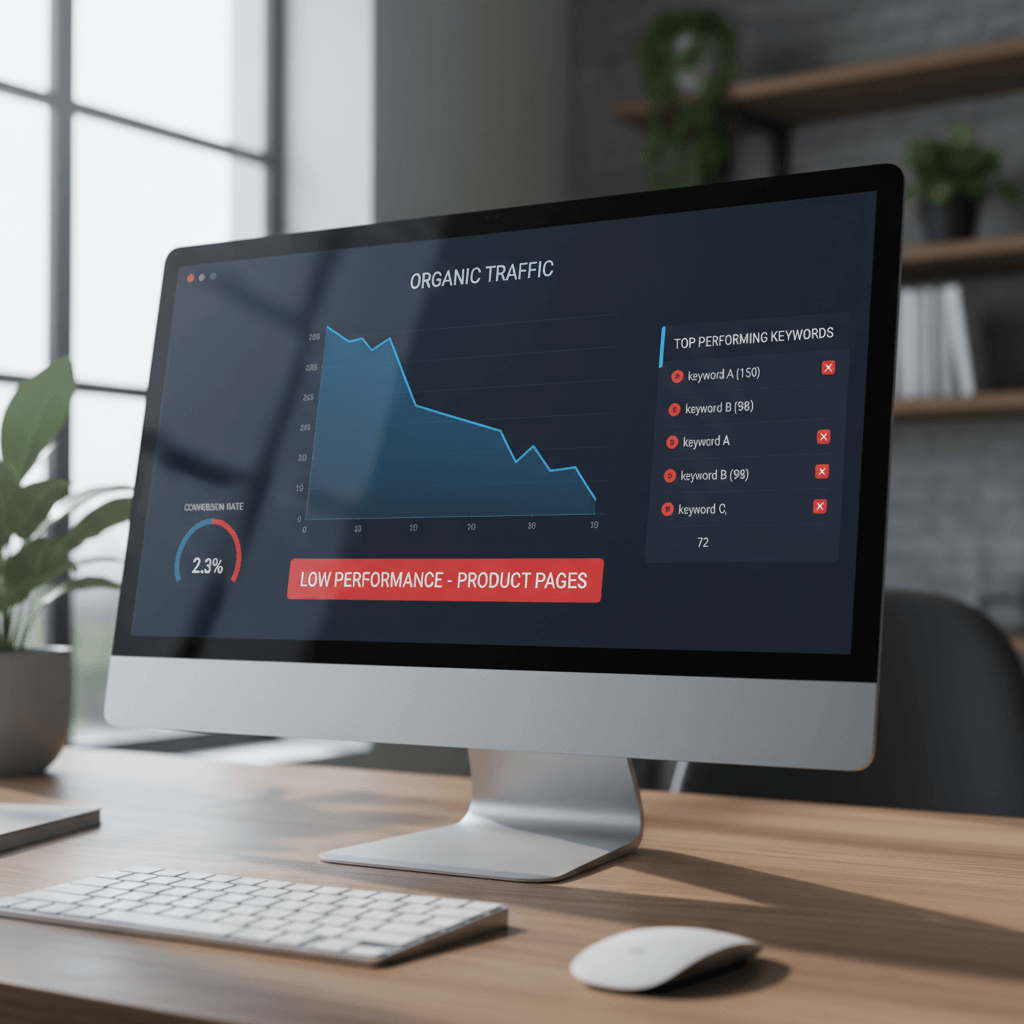
You’ve seen it before: a beautifully designed product page with stunning photography and compelling copy, but crickets in the analytics dashboard. Despite your best efforts, your products aren’t showing up prominently in search results for relevant queries. This lack of visibility translates directly into missed sales opportunities and a significant drain on your marketing budget as you compensate with paid ads. Imagine the potential of hundreds, even thousands, of qualified visitors landing on your product pages daily, ready to explore and buy, simply because a search engine deemed your page the most relevant answer to their query.
The day-to-day reality involves constantly checking conversion rates, tweaking ad spend, and wondering why your brilliant products aren’t getting the organic attention they deserve. It’s a cycle of frustration where your hard work behind the scenes isn’t translating into front-end success.
Why This Keeps Happening: Unpacking the Hidden Obstacles
It’s not your fault that your product pages aren’t ranking. Many D2C brands, especially on Shopify, encounter similar challenges due to a few common, yet often overlooked, factors:
- Underestimating Product-Specific Keyword Research: Many brands focus on broad brand keywords but fail to delve into the specific, long-tail keywords customers use when actively searching for a product like yours.
- Generic Content and Descriptions: Shopify themes provide basic templates, but without unique, keyword-rich, and persuasive product descriptions, your pages blend in rather than stand out to search engines and customers alike.
- Neglecting Technical SEO Nuances: Important elements like schema markup, page speed optimization, and proper internal linking are often overlooked, hindering a search engine’s ability to fully understand and rank your product pages.
- Inadequate Image Optimization: High-quality images are crucial for D2C, but if they aren’t properly optimized with alt text and efficient file sizes, they can slow down your site and miss valuable SEO signals.
- Ignoring User Experience (UX) Signals: Search engines increasingly prioritize user experience. Pages with high bounce rates, slow loading times, or poor mobile responsiveness are often penalized, regardless of their content.
The Short Answer: Holistic Product Page SEO is Your Sales Catalyst
The solution isn’t a quick fix, but a comprehensive strategy that weaves together technical SEO best practices, compelling content creation, and an exceptional user experience tailored specifically for product pages. It’s about meticulously optimizing every element of your product pages to not only satisfy search engine algorithms but, more importantly, to delight your potential customers. When done right, your product pages transform into powerful, organic sales funnels, consistently attracting, engaging, and converting high-intent buyers.
What The Solution Looks Like In Real Life: Your Products, Front and Center
Imagine logging into your Shopify dashboard and seeing a consistent upward trend in organic traffic to your product pages. Picture customers effortlessly finding your unique offerings through Google searches, drawn in by rich snippets that showcase ratings and prices directly in the search results. When they land on your page, it loads instantly, looks flawless on any device, and presents clear, engaging information that answers every question before it’s even asked. Each product description is a story, not just a list of features, compelling them to add to cart.
This reality is achievable when you systematically implement product page SEO. It means your products are no longer hidden gems, but prominently displayed storefronts in the digital world, constantly working to generate sales even while you sleep. It’s about building a sustainable, organic growth engine that reduces your reliance on paid channels and fosters genuine customer loyalty.

Step By Step: Transforming Your Product Pages into Sales Machines
Here’s a clear, actionable path to elevate your D2C Shopify product page SEO:
- Deep Dive into Product-Specific Keyword Research
- Go beyond broad terms. Think about how customers search for your specific product’s features, benefits, and even problems it solves.
- Use tools like Google Keyword Planner, Ahrefs, or Semrush to identify long-tail keywords (e.g., “organic cotton oversized tee for women” instead of just “t-shirt”).
- Include variations, synonyms, and related terms that align with user intent for purchase.
- Optimize Product Titles and Meta Descriptions
- Product Titles: Integrate your primary target keyword naturally at the beginning, ensuring it’s descriptive and enticing. Keep it concise, typically under 60 characters for optimal display in search results.
- Meta Descriptions: Craft compelling, keyword-rich summaries (150-160 characters) that encourage clicks. Highlight unique selling points, promotions, or urgency.
- Create Rich, Unique Product Descriptions
- Avoid manufacturer-provided descriptions. Write engaging, benefit-oriented copy that addresses customer pain points and explains how your product provides a solution.
- Naturally weave in your target keywords and secondary keywords throughout the text.
- Use headings (H2, H3), bullet points, and short paragraphs to improve readability and break up content.
- Include details on materials, sizing (with a comprehensive guide), care instructions, and what makes your product superior.
- Harness the Power of High-Quality Visuals and Alt Text
- Upload high-resolution images and videos that showcase your product from multiple angles, in use, and highlight key features.
- Crucially, optimize image alt text: Describe the image content accurately, incorporating relevant keywords. This aids visually impaired users and helps search engines understand your images. Example: “
“
- Compress images to ensure fast loading times without sacrificing quality.
- Implement Shopify SEO Apps and Schema Markup
- Utilize Shopify apps specifically designed for SEO (e.g., Plug in SEO, SEO Manager) to help manage meta tags, broken links, and other technical aspects.
- Schema Markup (Structured Data): This code helps search engines understand the content on your page, enabling rich snippets (e.g., product ratings, price, availability) in search results. Shopify themes often include some product schema automatically, but verification and enhancement are key. Learn more about Rich Snippets on Wikipedia.
- Optimize Page Speed and Mobile Responsiveness
- Use Google PageSpeed Insights to identify and fix issues slowing down your pages. Large images, too many apps, and inefficient code are common culprits.
- Ensure your Shopify theme is fully responsive, providing an excellent user experience on all devices, especially mobile, where a significant portion of D2C traffic originates.
- Integrate Customer Reviews and User-Generated Content
- Implement a review app (e.g., Loox, Judge.me) to collect and display genuine customer feedback.
- Reviews provide fresh, keyword-rich content, build trust, and significantly impact purchasing decisions and SEO rankings.
- Encourage customers to share photos and videos of your products, which can also be leveraged for content and social proof.
- Strategic Internal Linking
- Link from your product pages to related products, category pages, blog posts, and sizing guides within your store. This helps distribute “link equity,” improves user navigation, and shows search engines the relationships between your content.
- Ensure your main navigation is clear and logical.

How This Looks For Different People: Tailored Approaches
Product page SEO strategies can be adapted to various D2C scenarios:
- The New Shopify Entrepreneur Launching a Brand Focus on getting the basics right from day one. Prioritize thorough keyword research for your core product lines, craft unique and descriptive product copy, and ensure all images have proper alt text. Don’t get overwhelmed; a strong foundation is key. Begin with clear, concise titles and meta descriptions, and ensure your initial product descriptions are compelling.
- The Established D2C Brand with a Large Catalog Your challenge is scale. Implement an audit process to identify underperforming product pages. Use a data-driven approach, starting with your highest-value products or those with the most potential. Consider bulk editing apps for meta descriptions or hiring specialized content creators for unique descriptions. Focus on schema markup across your entire catalog to maximize rich snippet potential.
- The Niche Market Leader Expanding Offerings You have strong authority, so leverage it. For new products, focus heavily on long-tail keyword opportunities that cement your expertise in the niche. Use existing high-ranking pages to internally link to new product pages, boosting their visibility quickly. Consider creating detailed comparison guides or “how-to” articles that feature your products, linking back strategically.
What Might Still Be Holding You Back: Overcoming Common Hurdles
It’s easy to feel daunted by the prospect of technical SEO or the sheer volume of work involved. You might think:
- “I don’t have time for this.” – The reality is, investing time now saves you money on ads later and builds a sustainable growth engine. Even small, consistent efforts yield results.
- “I’m not an SEO expert.” – You don’t need to be. Shopify apps simplify many technical aspects, and by following these steps, you’re building fundamental expertise.
- “I’m afraid of breaking my site.” – Most SEO changes are content-based and reversible. For technical changes, always back up your theme or work in a development environment.
- “Will this even make a difference?” – Absolutely. Organic traffic from product pages often has the highest conversion rates because users are actively searching for what you offer.
Common Mistakes To Avoid in Shopify D2C Product Page SEO
- Keyword Stuffing: Over-optimizing by unnaturally repeating keywords harms readability and can lead to search engine penalties. Focus on natural language.
- Duplicate Content: Copying product descriptions from manufacturers or other pages on your site confuses search engines and dilutes your SEO efforts.
- Ignoring Mobile Experience: With the majority of online shopping happening on mobile, a non-responsive or slow mobile site is a major conversion and SEO killer.
- Poor Image Optimization: Using uncompressed, large image files or forgetting alt text both slow your site and miss crucial SEO opportunities.
- Neglecting Customer Reviews: Reviews are not just social proof; they’re fresh, keyword-rich content that signals relevance and trust to search engines.
- No Internal Linking Strategy: Leaving product pages as isolated islands prevents link equity flow and makes it harder for search engines to discover and rank all your offerings.
Your Implementation Checklist: A Path to Organic Growth
- Conduct in-depth keyword research for each product.
- Optimize product titles and meta descriptions with primary keywords.
- Write unique, engaging, and keyword-rich product descriptions.
- Compress all product images and add descriptive alt text.
- Verify and enhance product schema markup for rich snippets.
- Check and improve page load speed using Google PageSpeed Insights.
- Ensure your theme is fully mobile-responsive.
- Implement a customer review system and encourage user-generated content.
- Create a strategic internal linking structure for all product pages.
- Regularly monitor performance using Google Analytics and Search Console.
Your 7 Day Plan: Kickstarting Product Page SEO Success
Here’s a structured plan to begin your product page SEO journey:
- Day 1: Audit & Prioritize
Install Google Search Console and Google Analytics if you haven’t. Identify your top 3-5 highest-potential product pages based on current sales, traffic, or profit margins. These will be your focus for the week. - Day 2: Keyword Deep Dive
For your prioritized products, conduct thorough keyword research. Brainstorm long-tail keywords, related terms, and customer-centric questions. Map these keywords to specific sections of your product pages. - Day 3: Titles & Descriptions First Pass
Rewrite the product titles and meta descriptions for your prioritized pages, naturally incorporating your primary keywords. Focus on clarity, appeal, and search engine visibility. - Day 4: Content Refinement
Begin rewriting or enhancing the main product descriptions. Ensure they are unique, benefit-driven, and integrate your secondary keywords. Use H2/H3 headings and bullet points for readability. - Day 5: Visual Optimization
Go through your prioritized product images. Compress them for faster load times and add descriptive alt text for every single image, incorporating relevant keywords. - Day 6: Technical Check & Schema
Run your product pages through Google PageSpeed Insights. Address any easy fixes (e.g., image compression). Verify your product schema markup using Google’s Rich Results Test tool. - Day 7: Internal Linking & Review Strategy
Add internal links from related blog posts or category pages to your optimized product pages. If you don’t have one, research and plan for a customer review app implementation. Celebrate your initial progress!
Summary: Unlock Your D2C Shopify Store’s Organic Potential
Mastering product page SEO is no longer optional for D2C brands on Shopify-it’s a critical growth strategy. By dedicating time and effort to understanding your customers’ search intent, optimizing every element of your product pages, and continually refining your approach, you can transform these pages into powerful, organic sales engines. Move beyond costly ad dependence and build a sustainable, resilient foundation for your brand’s success. Your incredible products deserve to be found, seen, and celebrated.
Ready to turn your product pages into conversion powerhouses? Start implementing these strategies today and watch your organic sales climb.
Sources
- Search engine optimization – Wikipedia
- E-commerce – Wikipedia
- Shopify – Wikipedia
- Structured data – Wikipedia
FAQ
Q: How long does it take to see results from product page SEO?
A: SEO is a long-term strategy. You might see initial improvements in traffic and rankings within a few weeks to a few months. Significant, sustained results typically develop over 3-6 months as search engines re-crawl and re-evaluate your optimized pages.
Q: Do I need a specific Shopify app for product page SEO?
A: While Shopify provides a good foundation, apps like “Plug in SEO” or “SEO Manager” can greatly assist with meta tag optimization, broken link checks, sitemap management, and schema markup, making the process more efficient, especially for larger catalogs.
Q: Is duplicate content on product pages really a problem? What if I sell similar items?
A: Yes, it is. Search engines prefer unique, valuable content. If you sell similar items, focus on highlighting the distinct features, benefits, and target audience for each. Even slight variations in descriptions, combined with unique imagery and alt text, can make a difference. Use unique selling propositions for each product.
Q: How often should I update my product page content?
A: It’s good practice to review and refresh your product pages periodically-at least once or twice a year, or when there are significant product updates, new customer feedback, or changes in keyword trends. New reviews and user-generated content also help keep the page fresh.
Q: Can improving product page SEO help with local searches?
A: While product page SEO primarily targets general organic search, if your D2C brand has a physical location or targets specific regions, ensuring your product pages are well-optimized contributes to overall domain authority. This, in turn, can indirectly benefit your local SEO efforts when combined with a strong Google My Business profile.